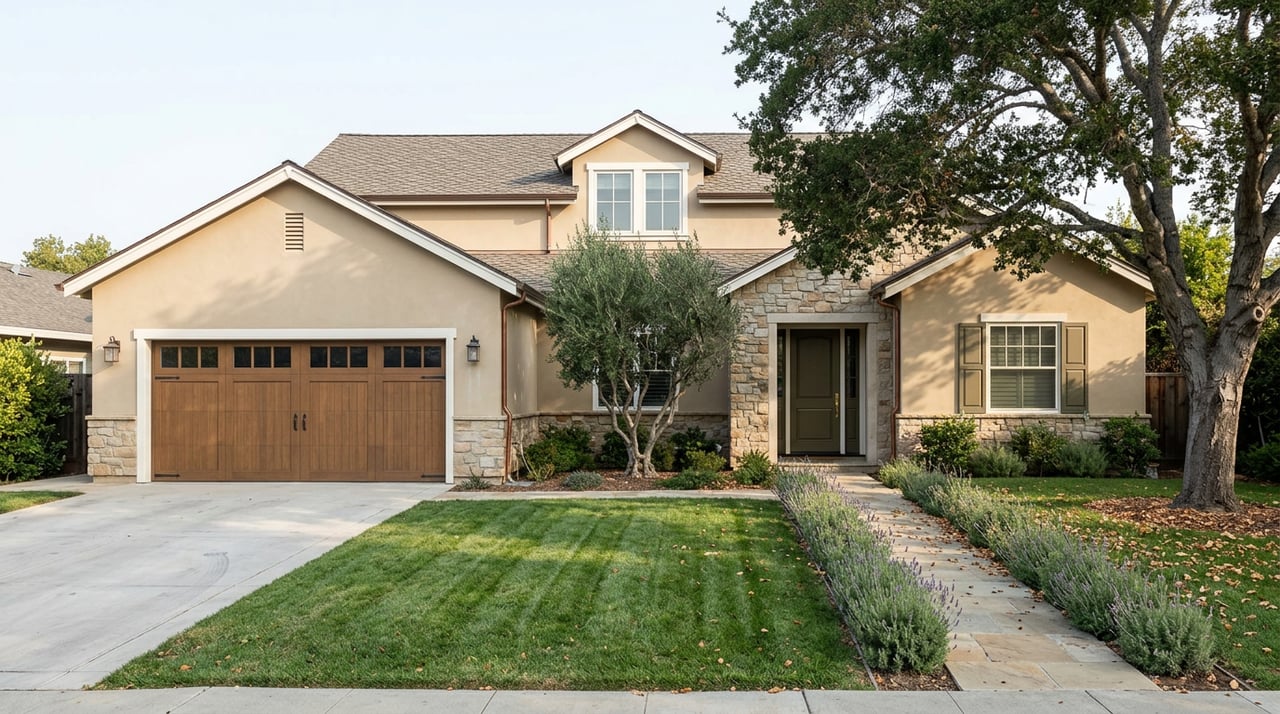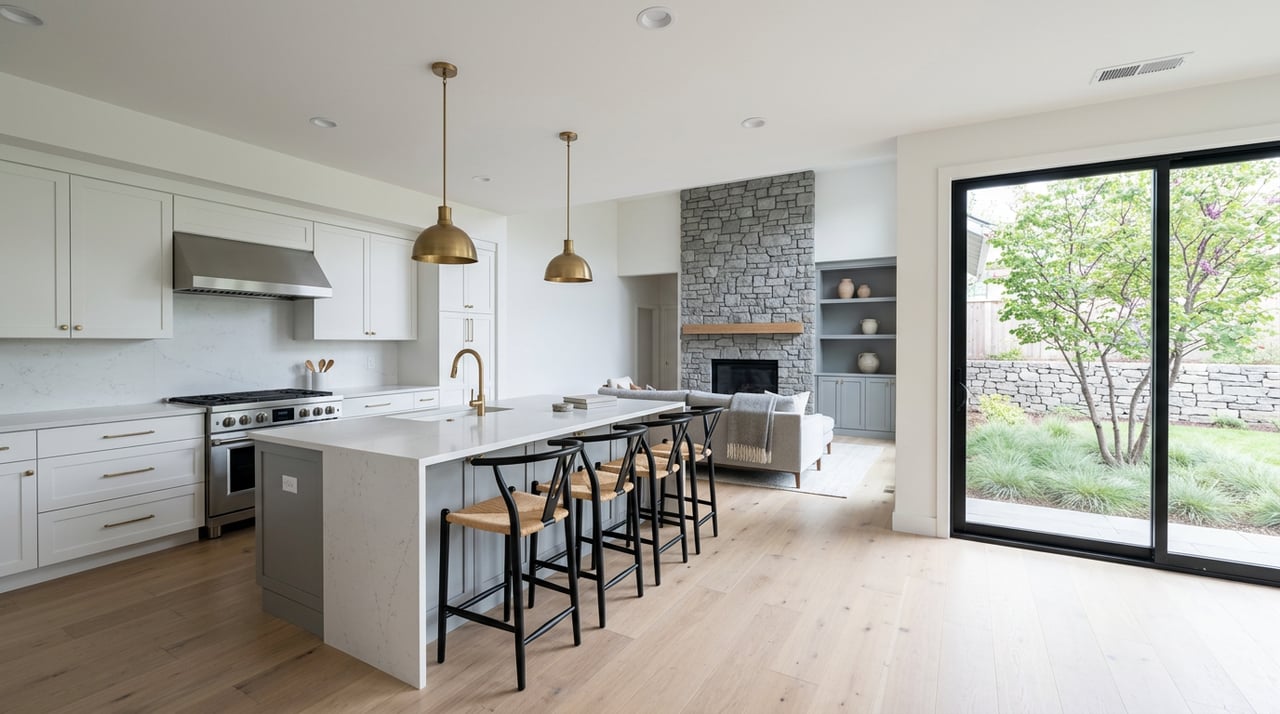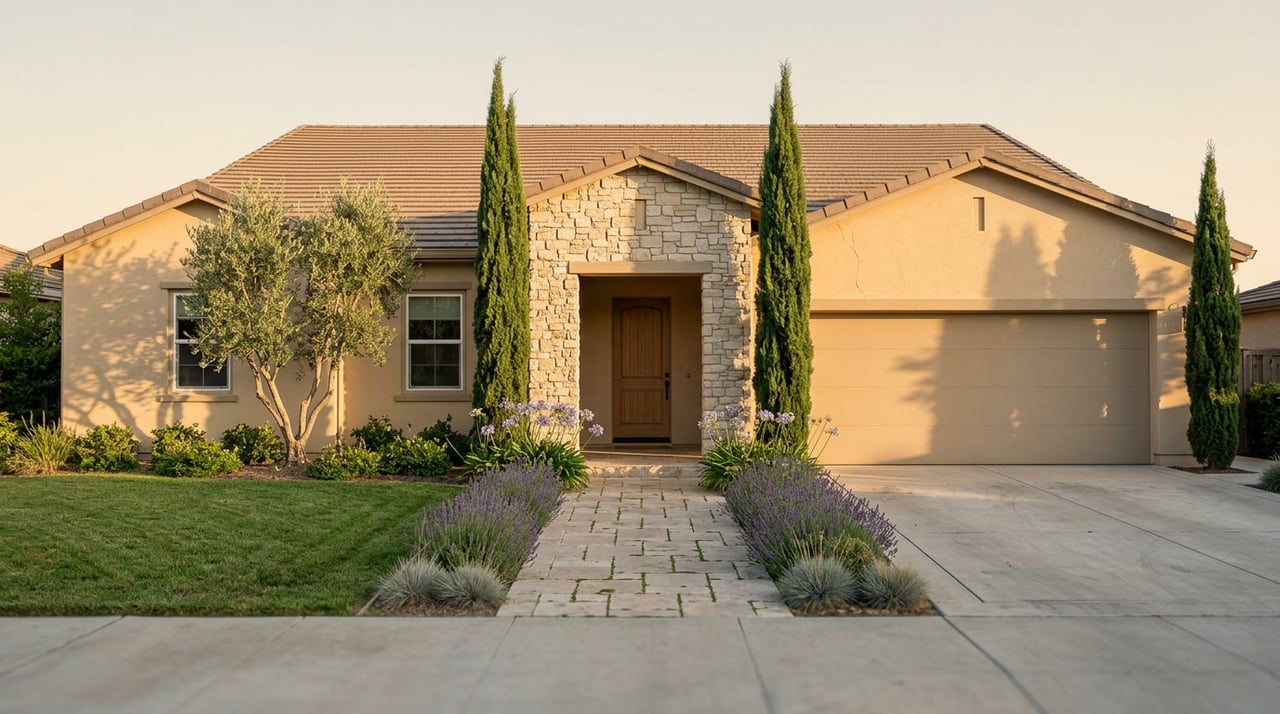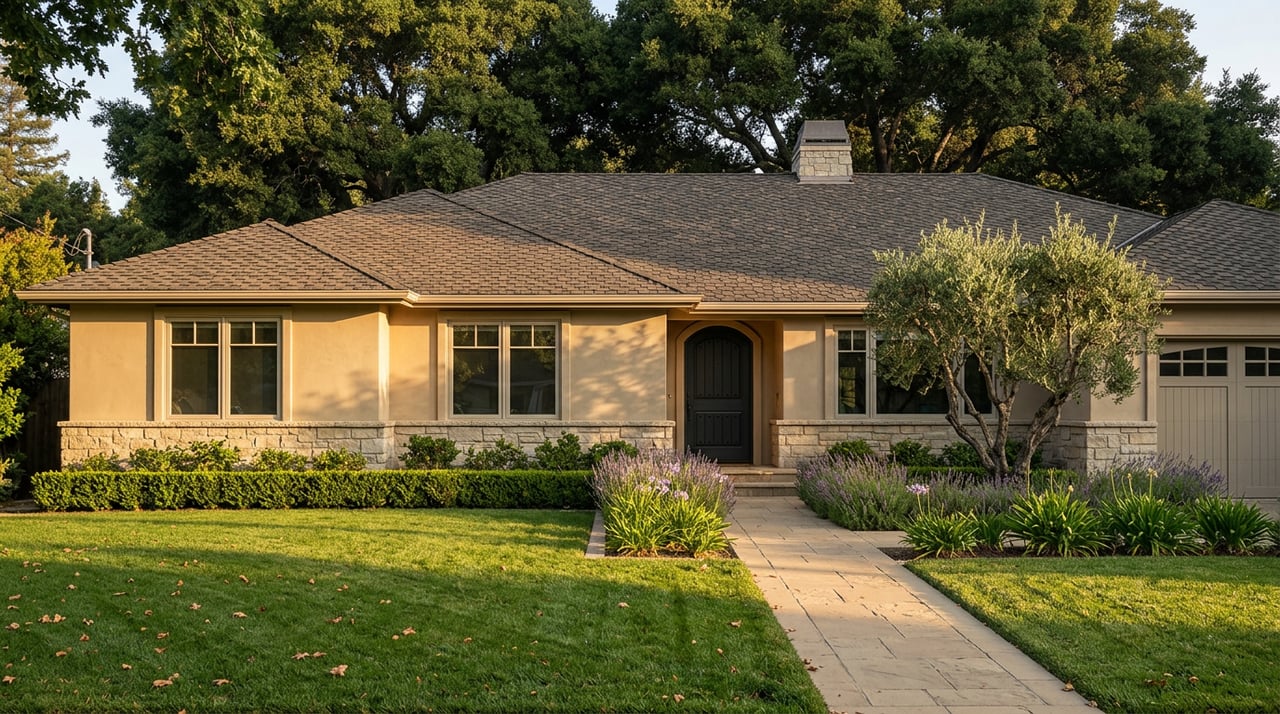
A buyer touring a three-bedroom in Hollister on a Tuesday morning can be standing in a kitchen with granite counters and a fenced backyard, then twenty minutes later be sitting behind a slow-moving piece of agricultural equipment on a two-lane stretch of Highway 25, watching the next showing's start time slip away. That drive, not the mileage on a map, is the reason a comparable house in Gilroy costs so much more.
Most people explain the price gap between Hollister and Gilroy as a distance discount: Hollister is farther out, so it costs less. The two cities sit roughly the same distance apart as many commutes inside Santa Clara County that carry no such discount at all. What actually separates them is a specific, decades-old, still-unresolved piece of road, and understanding that changes how a buyer should think about the gap and whether it is likely to close.
The Discount Isn't About Miles
Highway 25 is the only direct route connecting Hollister to Gilroy and the 101 corridor beyond it. For most of its length it is still a two-lane conventional highway, the kind where agricultural equipment, local driveway traffic, and commuters heading to jobs in San Jose or Santa Clara all share the same narrow lanes. Caltrans planning documents for the corridor identified dozens of driveways and intersections feeding directly onto the highway and rejected a no-build alternative specifically because of growing traffic congestion. That mix of slow local traffic and through commuters on a road with no passing lane is exactly the kind of bottleneck that shows up as unpredictable drive time rather than a fixed number of extra minutes.
This is not a new complaint. Caltrans has described the long-range plan for Highway 25 as converting the two-lane highway to a four-lane expressway since at least its 2007 Transportation Concept Report for the corridor. Nearly twenty years later, that conversion still has not broken ground.
What "Under Construction" Actually Means on Highway 25 Right Now
Drive the corridor today and there is visible construction activity, which can create the impression that a fix is imminent. It helps to separate what is actually happening from what people mean when they say "they're widening 25."
| Project | What it actually does | Status as of mid-2026 |
|---|---|---|
| Median barrier, Highway 25 bypass curve in Hollister | Safety barrier, adds no capacity | In design; construction expected early 2027 |
| Southbound 101/SR 25 off-ramp widening and bikeway | Wider ramp and a bike lane, not a new through-lane | Under construction; targeted complete fall 2028 |
| Santa Teresa Boulevard extension | New connector road feeding the future interchange | In planning; no construction date set |
| SR 25 four-lane widening, Segment 1 (San Felipe Road to Hudner Lane) | The actual added-lane capacity fix | Environmental review; construction targeted to start in 2031 |
| SR 25 four-lane widening, Segment 2 (Hudner Lane to Bloomfield Avenue) | Extends the fix toward the Santa Clara County line | No environmental timeline or construction date set |
Everything currently underway is a safety or connector improvement. The project that would actually change the commute, the four-lane widening itself, is still in environmental review for its first segment, with construction not expected to begin until 2031. Its second segment does not have a start date at all.
Caltrans has been direct about why the fix matters. The agency has said the eventual conversion "would improve mobility and reliability for all users within the corridor." That statement has been true for years. It is still not funded through to completion.
The Backup Plan That Isn't a Sure Thing
The obvious counter-argument is that a buyer worried about the drive could simply take transit instead. That option is thinner than it looks, and getting thinner.
Hollister has no Caltrain station of its own. Reaching the rail system means first getting to Gilroy, either by car or by San Benito County Express, which runs a Hollister-to-Gilroy commute route tied to the Gavilan College academic calendar rather than a standing daily schedule. Once at Gilroy, the connection is the diesel-powered South County Connector, since the segment south of Tamien is not electrified and Caltrain does not own those tracks.
That connector service is itself under public debate. A 2025 letter published in the Gilroy Dispatch, citing VTA and Caltrain figures, put weekday ridership across the five South County stations at:
- Gilroy: 126 riders per day
- Morgan Hill: 104 riders per day
- Blossom Hill: 68 riders per day
- Capitol: 45 riders per day
- San Martin: 22 riders per day
a combined 365 riders a day against an April 2025 calculation of the service's fiscal year 2026 operating cost, about $14.45 million a year. That combination of low ridership and high cost is the basis for an active proposal to pause South County Caltrain service rather than expand it. A buyer weighing Hollister against Gilroy on the assumption that rail will eventually pick up the slack should know that the agencies involved were, as of that debate, arguing about cutting the service, not growing it.
What the Gap Actually Buys You
As of August 2026, Hollister's median sold price sat at $739,500 across the trailing six months of tracked closings, with the middle half of sales landing between $660,000 and $789,628, and a median price per square foot of $403. Gilroy's typical home value, as measured by one widely used home-value index, was $1,040,819 as of the end of June 2026. Other 2026 market reports on Gilroy put the median sale price anywhere from about $900,000 to just over $1.19 million depending on the exact month tracked, which is a real spread, but every version of it still lands well above Hollister's figure.
Even accounting for the fact that the freshest available Gilroy figures run a few months behind Hollister's, the gap between the two cities is too large to be explained by ordinary quarter-to-quarter drift. It reads more like a premium buyers are willing to pay in Gilroy specifically to avoid the Highway 25 commute, and a discount sellers in Hollister are effectively offering because of it.
What This Means If You're Cross-Shopping Hollister and Gilroy
For a finance-minded buyer, the practical takeaway is to price the commute as a real cost rather than a lifestyle inconvenience. A quarter to nearly half a million dollars in purchase price buys years of a two-lane commute that will not meaningfully improve before the early 2030s at the earliest, and even that depends on Segment 1 construction actually starting on schedule.
For a move-up seller in Hollister marketing to buyers who are also looking at Gilroy or Morgan Hill, the honest pitch is not that the commute is fine. It is that the price reflects the commute, and that reflects real, bankable savings today against a fix that is still years from breaking ground.
For anyone weighing this as a longer-term hold, the timeline itself is the risk to underwrite. Segment 1 alone is projected to take about two years to build once construction starts in 2031, and Segment 2 currently has no schedule at all.
Frequently Asked Questions
Will Highway 25's widening raise Hollister home values once it's finished? It may eventually reduce the commute-based discount, but the fix that matters, the four-lane widening itself, has no confirmed construction start before 2031 for its first segment and no date at all for its second. Any value effect tied to that project is a long-horizon bet, not a near-term one.
Can a Hollister buyer just rely on rail transit instead of driving Highway 25? Not currently. Hollister has no direct Caltrain station, the county bus connector to Gilroy runs on a school-calendar schedule, and the diesel South County Connector at the Gilroy end is the subject of active public discussion about being paused due to low ridership relative to its operating cost.
If you are weighing a move between Hollister and its South Santa Clara County neighbors and want to work through what the commute, the financing, and the timeline actually mean for your numbers, JOSE LOPEZ brings a background in lending, corporate finance, and Central Coast market knowledge to that conversation. Reach out for a clear-eyed look at what a Hollister purchase or sale means for your specific plans.