How many new homes can actually get built in Morgan Hill in a given year? Ask a longtime resident or scroll through an older listing description and you'll likely hear the same number: 215, and only if a developer wins the allotment competition. That number described a real system for more than four decades. It stopped describing anything enforceable on January 1, 2020.
If you're comparing Morgan Hill to Gilroy, San Jose, or another South Santa Clara County market this year, that six-year gap between the story and the statute matters more than any single price point you'll find on a listing page. It's the difference between pricing a market that's scarce by design and pricing one that's currently absorbing a real construction wave.
Where the 215 number came from
Morgan Hill voters first adopted a Residential Development Control System in 1977, aimed at slowing the pace of growth and its strain on city services. Voters renewed and tightened it several times over the decades, most recently with Measure S in November 2016. Measure S is codified in the city's own Municipal Code as Chapter 18.156, and it set two hard numbers: an absolute population ceiling of 58,200 through January 1, 2035, and a cap of 215 new residential allotments per calendar year. Under that system, builders competed for a fixed, scored pool of allotments, and winning one was the whole game. A Morgan Hill entitlement was worth fighting for precisely because so few of them existed.
That scarcity is the story still circulating in a lot of market chatter about the city. It's also the story a lot of current listings, and even some market commentary, still lean on without checking the date.
What actually changed in 2020
Governor Newsom signed Senate Bill 330, the Housing Crisis Act of 2019, effective January 1, 2020. SB 330 enacted Government Code Section 66300 and was later extended through 2030. The city's own planning page on the subject is direct about the outcome: the Residential Development Control System has been suspended. The population ceiling and the 215-unit cap remain written into the municipal code, but state law preempts the city from enforcing either one while SB 330 is in effect.
Two other state and local mechanisms are doing additional work alongside SB 330. Ministerial approval under SB 35 lets qualifying multifamily projects skip discretionary review entirely, provided at least half the units serve households under 80 percent of area median income. And the city's own Inclusionary Housing Ordinance, adopted in 2018, requires 15 percent of units citywide, and 10 percent downtown, to be priced below market rate, with a funding mechanism the City Council added in December 2021 to help meet the Regional Housing Needs Allocation.
None of this is a workaround at the margins. It's a structural override of the system that made Morgan Hill's housing supply predictable for close to fifty years.
What the override actually produced
Reporting from the Morgan Hill Times in mid-2025 put a number on the shift: more than 800 housing units were under active construction across seven projects at that point, part of a development pipeline exceeding 3,000 units citywide. The city's Housing Element, published in 2023, set a goal of 1,037 new housing units by 2031. Builder's Remedy projects, the SB 330 provision that lets developers bypass local zoning if they set aside 20 percent of units for low-income housing, made up roughly 21 percent of that total pipeline according to the same reporting.
A sample of what's actually moving through the pipeline, based on the city's own project pages and recent local reporting:
| Project | Units | Location | Notes |
|---|---|---|---|
| Tennant-Ten South | 259 | Tennant Ave & Butterfield Blvd | Multifamily, benefited from SB 330 streamlining |
| Lillian Commons – Rosewood | 120 | Near Butterfield corridor | Mixed duets and townhomes |
| Borello Ranch Estates | 243 (additional) | Cochrane Road, below Anderson Dam | Expansion of an existing gated community |
| Butterfield-Keenan | up to 409 | Butterfield Blvd & Jarvis Drive | General Plan Amendment from industrial to multifamily zoning |
| DePaul Residences | pending | Near DePaul intersection, ~16 acres | CEQA environmental documents filed in 2026 |
That's not a market metering itself down to 215 homes a year. It's a market where a developer who couldn't have won an allotment in 2018 can now build 259 units by right in 2025, or 409 units on a single General Plan Amendment.
What this means for reading a comp sheet
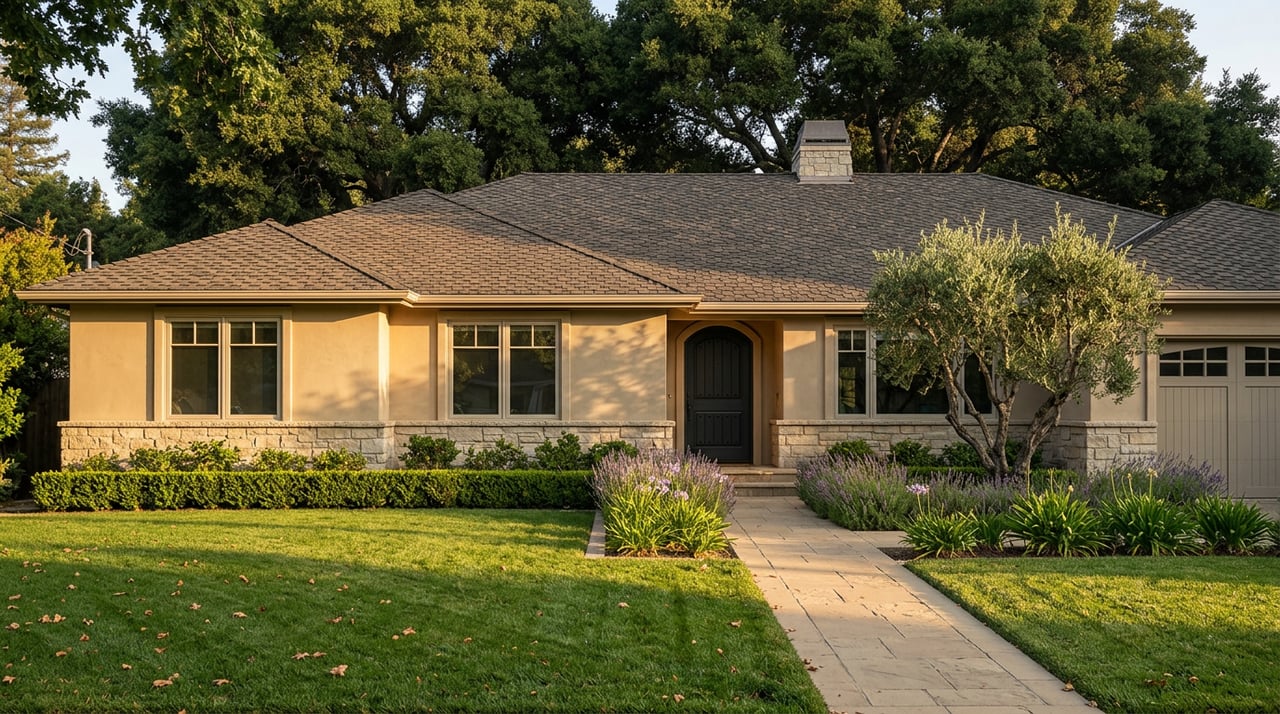
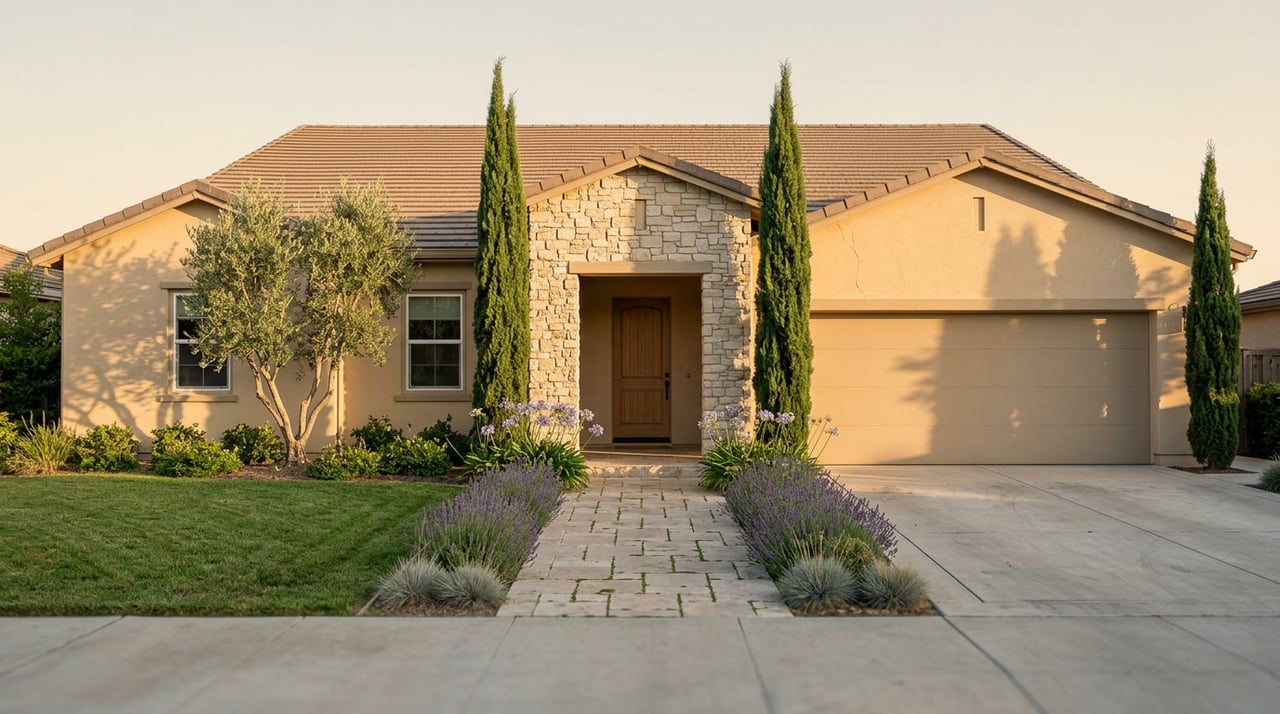
Morgan Hill's housing stock now sits in two distinct cohorts, and portals mix them into a single median without saying so. One cohort is older RDCS-era product, homes and small subdivisions that actually competed for a scarce allotment, often ranch-style builds or the 1990s-2000s tract subdivisions that make up much of the city's housing today. The other cohort is new density-bonus and Builder's Remedy product, built under state overrides that didn't require competing for anything and often carries different unit mix, lot size, and affordability set-asides.
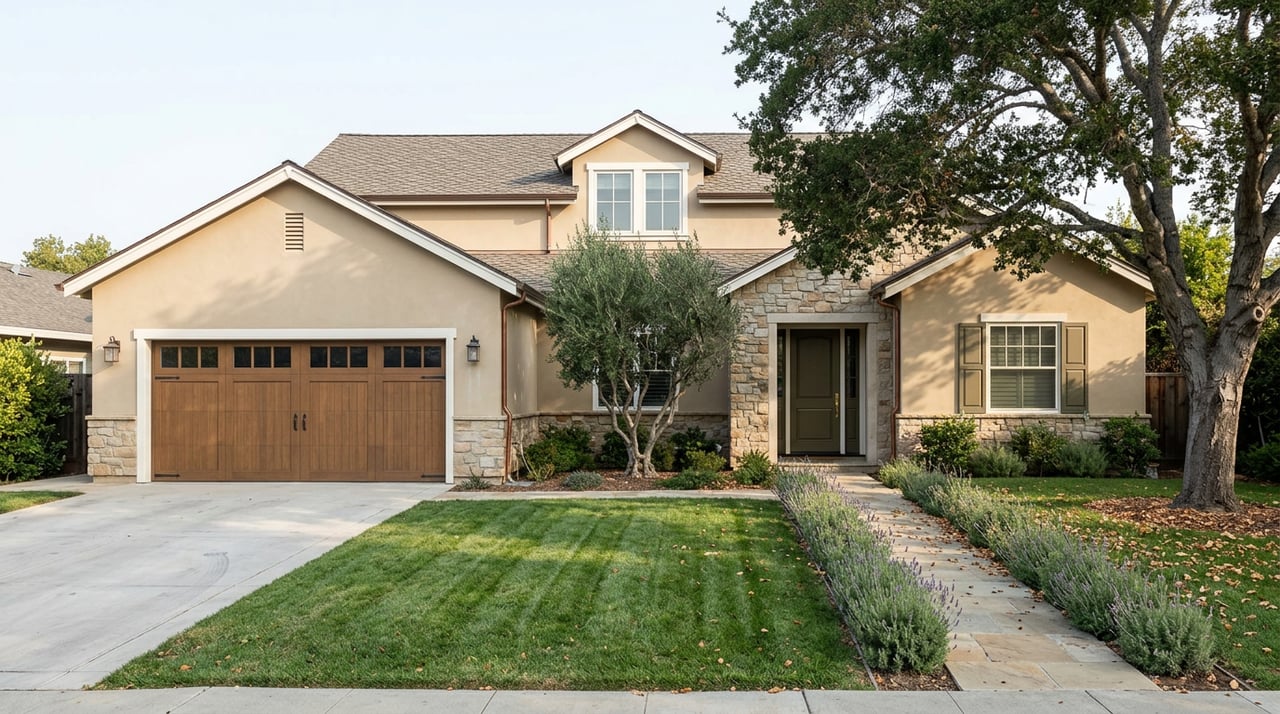
Treating those two cohorts as interchangeable comps is where a buyer or seller loses the thread. A 2019 stucco home entitled under the old point-scoring system isn't the same asset, in supply terms, as a 2025 attached unit approved by right under SB 35. Both will show up in the same neighborhood search on any listing site. Only one of them came from a market that was actually scarce.
If you're evaluating a specific property, it's worth asking two practical questions before you anchor on the city's reputation for scarcity. First, was this home part of a subdivision that competed for RDCS allotments, or was it entitled after 2020 under one of the state overrides? Second, what's in the development pipeline within a mile of the address, since a cluster of Builder's Remedy or density-bonus projects nearby changes the near-term supply picture on that specific street even if the citywide numbers look tight.
What the current numbers actually show
Trailing six-month data through early September 2026 puts Morgan Hill's median closed sale price at $1,291,500, with a median sale price per square foot of $632, according to closing-level tracking from Resideline. The middle half of those sales closed between $945,000 and $1,825,000, a spread wide enough that the citywide median tells you less about a specific property than the range does. Homes are moving from listing to contract in a median of 15 days and from contract to closing in another 21, again per the same trailing six-month window.
None of that reads like a market defending a hard cap on new supply. It reads like a market with real inventory moving at a real pace, which lines up with what the pipeline numbers above would predict.
A few things to check before you write an offer
- Ask your agent whether the specific subdivision or address was entitled before or after January 1, 2020, and what that means for the age and design of the surrounding housing stock.
- Look up what's filed within a mile of the property on the city's Development Projects map before assuming the neighborhood's supply is fixed.
- Read the median sale price for the specific price band you're shopping in, not the citywide figure, since the middle-half spread in Morgan Hill currently runs from under a million to well above $1.8M.
Frequently Asked Questions
Is Morgan Hill still under a population cap? The cap written into Municipal Code Chapter 18.156 still exists on paper, but it hasn't been enforceable since SB 330 took effect in January 2020, a preemption now extended through 2030.
Does any of this apply to nearby San Martin? No. San Martin is unincorporated land governed by Santa Clara County, not the City of Morgan Hill, so the city's growth-control history and the state preemption that followed it both stop at the city limit.
Reading a market correctly means separating the story people tell about a place from what its permits, filings, and closings are actually doing. That's the same lens Jose Lopez brings to every conversation about pricing, financing, and timing in Morgan Hill and the rest of South Santa Clara County, built from years of finance and lending work before real estate became the focus. If you're comparing Morgan Hill to another South Bay market and want a read on what a specific address is really worth given what's in the pipeline around it, JOSE LOPEZ offers a free home valuation to start that conversation.